

Exploring the World of Technopolis Through Blogging
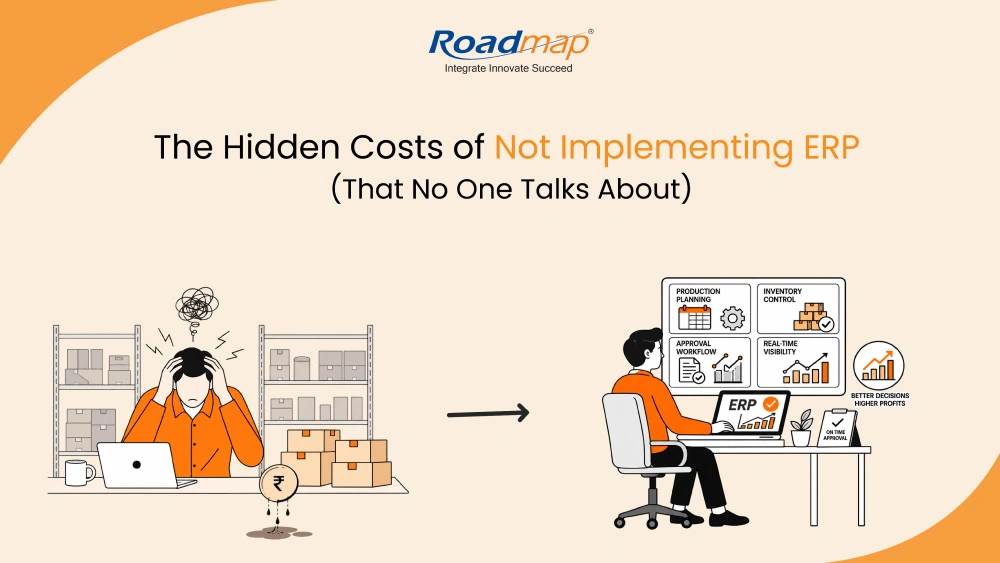
The Hidden Costs of Not Implementing ERP (That No One Talks About)
“The most expensive problems in manufacturing rarely appear in your Profit & Loss statement.”
1. The ₹50 Lakh Leak Nobody Could Find
A factory owner once told me something that stayed with me.
“Every month, our accountant says we're profitable.
But somehow, there's never enough cash.
Production keeps getting delayed.
Customers complain more often.
And every month feels harder than the previous one.”
So I asked him a simple question.
“What do you think is costing you the most?”
His answer came immediately.
“Raw material prices.”
Then he blamed electricity.
Then labour.
Then GST.
After spending two days inside his factory, we found something surprising.
It wasn't any of those.
It was small operational inefficiencies happening hundreds of times every day.
No single problem looked serious.
Together...
They were costing him far more than he imagined.
The Most Dangerous Costs Never Appear as Expenses
If you buy a machine for ₹40 lakhs...
You know exactly what it cost.
If you hire ten employees...
You know exactly what they cost.
But what is the cost of:
- one delayed approval?
- one missing material?
- one wrong inventory entry?
- one forgotten follow-up?
- one production plan changed at 4 PM?
Nobody sends an invoice for those.
Which is exactly why businesses underestimate them.
The Hidden Costs You Should Actually Measure
Let's walk through them.
1. The Cost of Waiting
Think about how often work stops because someone is waiting.
Waiting for:
- approval
- material
- drawing
- QC clearance
- machine availability
- management decision
Nobody is producing.
Nobody is moving.
Everyone is waiting.
Now multiply that waiting by:
- 50 employees
- 300 working days
- several interruptions every day
Waiting is one of the biggest invisible costs inside manufacturing.
2. The Cost of Poor Decisions
Imagine this situation.
Sales says stock is available.
Production says it isn't.
Stores says it was issued yesterday.
Accounts says it hasn't been purchased.
Who is right?
Nobody knows.
When leaders make decisions without reliable information, they usually choose one of three options:
- buy more inventory
- delay production
- keep extra safety stock
Sometimes all three.
Information uncertainty is expensive.
3. The Cost of Firefighting
Firefighting feels productive.
Everyone is busy.
Phones ringing.
Meetings happening.
Problems getting solved.
But ask yourself:
How many of today's problems...
...already happened last month?
If the answer is “many,”
then your organization is paying repeatedly for the same issue.
That's not productivity.
That's recurring operational debt.
4. The Cost of Excess Inventory
Many factories buy extra inventory because they're afraid.
Afraid of shortages.
Afraid of delayed suppliers.
Afraid of inaccurate stock records.
So they buy more.
What happens next?
Money that could have been invested in:
- new machines
- better tooling
- product development
- hiring skilled people
ends up sitting quietly on warehouse shelves.
Inventory is important.
But unnecessary inventory is money wearing a warehouse uniform.
5. The Cost of Lost Trust
This one doesn't appear in any financial report.
A customer asks:
“Will my order dispatch on Friday?”
Your team replies:
“We'll check and get back to you.”
Nothing wrong with that.
Once.
Twice.
Maybe three times.
Eventually customers stop hearing uncertainty.
They start feeling uncertainty.
And trust slowly becomes weaker.
Trust lost today often becomes business lost six months later.
6. The Cost of Leadership Attention
This is the hidden cost almost nobody calculates.
Imagine the Managing Director spends:
- 2 hours every day chasing updates
- 1 hour resolving operational confusion
- another hour approving routine activities
That's four hours every day.
Now ask yourself:
What could those four hours have been spent on?
- new customers
- new products
- cost reduction
- exports
- expansion
- strategic partnerships
Leadership attention is one of the most valuable resources in any business.
Using it to solve routine operational confusion is incredibly expensive.
7. The Cost of Employee Frustration
Good employees don't usually leave because manufacturing is difficult.
They leave because good work becomes unnecessarily difficult.
Imagine being a production planner who has to call four departments every morning just to know whether today's plan is realistic.
Or a purchase executive who discovers shortages only after production has stopped.
Or an accounts executive who spends two days every month reconciling information that should already match.
Over time, talented people stop feeling challenged.
They start feeling exhausted.
And frustration eventually turns into attrition.
Replacing experienced employees costs far more than most companies calculate.
A Different Way to Look at ERP
Many discussions begin with this question:
“How much does ERP cost?”
But perhaps there's a better question.
“How much is our current way of working already costing us?”
Because every day without operational visibility has a price.
Sometimes that price is measured in money.
Sometimes in customer trust.
Sometimes in employee morale.
Sometimes in leadership bandwidth.
And often...
it's all of them combined.
A Simple Exercise for Your Leadership Team
In your next review meeting, don't discuss software.
Instead, ask these questions:
- How many production delays happened this month?
- How many were preventable?
- How much time did leadership spend resolving operational issues?
- How many customer commitments changed after they were promised?
- How many decisions were delayed because information wasn't available?
Write the answers down.
You might discover that your biggest operational costs were never on your financial statements.
Final Thought
Factories don't become inefficient overnight.
They become inefficient one invisible delay...
one missing update...
one repeated mistake...
one forgotten follow-up...
at a time.
The challenge isn't that these costs are impossible to reduce.
The challenge is that most organizations never measure them.
Because the most expensive operational problems...
are usually the ones that nobody realizes they're paying for.
ERP ERPImplementation ManufacturingERP OperationalEfficiency RoadmapIT